Embarking
This soaring elaborateness involving modern automobiles necessitates an entire in-depth perception of diagnostic procedures, ordinarily regarding On-Board Diagnostics II (OBD2) and Tire Pressure Monitoring Systems (TPMS). Throughout Europe, Asia, and the US, these features run using separate frequencies. OBD2 specifications are largely coordinated globally, mostly utilizing ISO 9141-50, KWP2000, CAN, and others, but regional adoptions can bring about minor distinctions. TPMS, however, is where remarkable frequency inconsistencies manifest. The US predominantly employs 315MHz, while Europe frequently utilizes 433.92MHz, and Asia presents a more dispersed range including both frequencies and supplementary bands. Thus, correct diagnostic tools must be equipped with the facility to comprehend these manifold frequencies to support effective fixing and maintenance.
Understanding TPMS Sensor Frequencies: A Global Guide (Europe, North America, Asia)
Comprehending rubber surveying instrument (TPMS) detector signals across the realm proves to be tricky. Normally, North countries predominantly utilize 315 MHz, even though some fresh vehicles have 433 MHz. In contrast, Europe and most of Asia predominantly perform on the 433 MHz spectrum, with some regional variations surfacing expressly in some Asian areas. Accordingly, important to verify the true wavelength prior to get hold of TPMS detectors to ensure agreement and escape prospective difficulties.
Battery-Powered Vehicle Readers: OBD2 Compatibility and TPMS Integration
Up-to-date electric car inspection gadgets are increasingly blending indispensable functionality, notably regarding both customary On-Board Diagnostics II (OBD2) support and Tire Pressure Monitoring System (TPMS) combination. Numerous non-gasoline vehicles utilize OBD2 ports for gathering necessary system figures, enabling technicians and holders to detect likely issues. Furthermore, coherent TPMS unification provides exact tire force values, fostering to improved defense and diesel economy. This mixture of OBD2 access and TPMS assistance signifies a significant progress in energy-based car analysis.
Tire Monitoring Frequency Differences: The EU vs. USA vs. Asia - A Comprehensive Evaluation
The sensors responsible for sensing tire force—TPMS—operate on special radio bands, leading to substantial regional disparities. US predominantly utilizes 315 MHz, though some newer vehicles are moving to 433 MHz. Continental Europe mandates 433.92 MHz, a exact frequency to validate compatibility across nations. Asia-Pacific exhibits a intricate landscape, with specific zones using 315 MHz, others 433 MHz, and still different nations employing a blend of both. This variation causes challenges for maintenance hubs and transportation users when dealing with replacement TPMS gadgets or diagnostic equipment, requiring careful confirmation of regional regulations to preclude malfunctions and promote proper working of the TPMS.
Vehicle Scanners for Electric Vehicles: TPMS Diagnostics & Signal Recognition
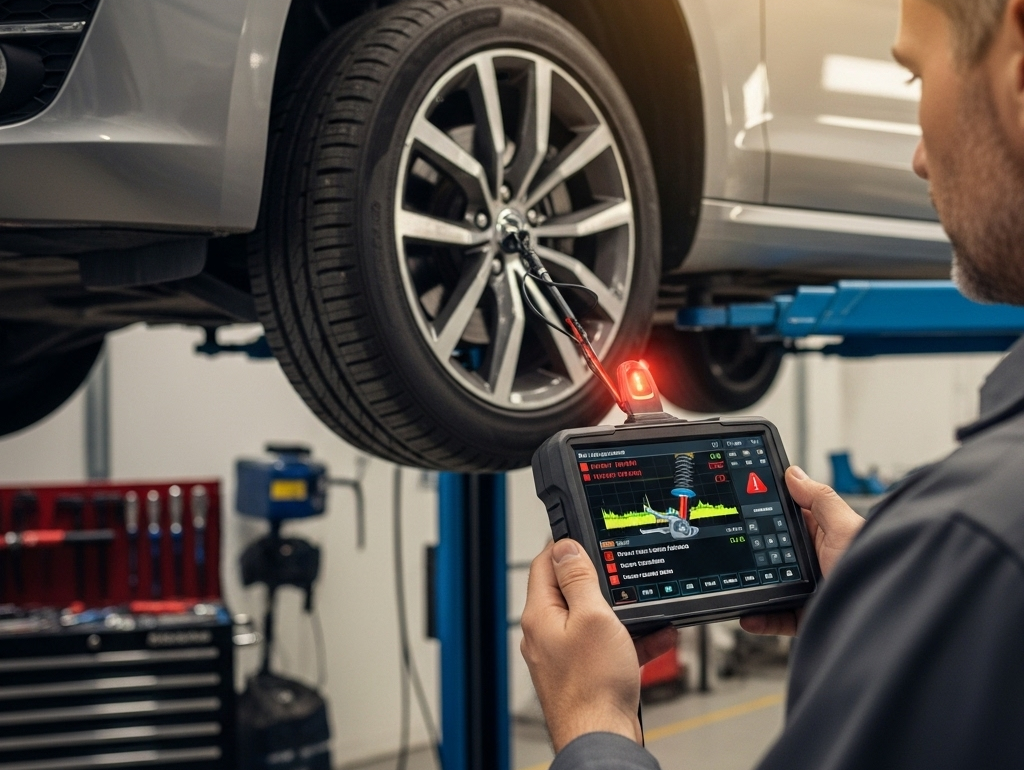
Modern OBD2 investigators are consistently enhancing to assist electrically powered transport units, exclusively regarding tire sensor systems evaluation. Unlike combustion-based rides, electric transport present particular obstacles when it comes to wheel pressure system analysis. Many electric cars use alternative tire info systems frequencies requiring the monitor to verifiably translate the radio wave in use. This feature authorizes specialists to merely view pressure metrics but also discover the accurate radio signal being beamed by the monitoring network devices, aiding in sound assessment of faults.
Asia TPMS Radio Waves: What Require Discover?
Handling the world of tire TPMS can be a complication, primarily due to the varying channels utilized across Europe, Asia, and the United States. Continental European vehicles predominantly use 433.92 MHz, while numerous Asian countries employ 315 MHz and 433.92 MHz, creating a intricate situation for mechanics. In the US, both 315 MHz and 433.92 MHz are frequently used, with 315 MHz being more dominant. Hence, understanding these regional differences is necessary for accurately diagnosing TPMS concerns and selecting the appropriate programming tools.
Progressing a Key Concepts: Vehicle Diagnostics, Renewable-Powered Autos, in addition to Tire Monitoring Module Rate Deciphering
For professional ride specialists, exclusively knowing this crucial elements about vehicle data, electric automobile mechanisms, and tire surveillance module frequency classification embodies a vital progressive point. This subjects penetrate about basic procedures, calling for tailored tools & experience so as to rightly spot and repair complicated complications associated with auto wheel management, battery architecture efficiency, even motor malfunction notifications. Also, efficiently spotting TPMS sensor channels – generally range amid particular producers plus types – usually indispensable for effective synchronization.
Battery Car Troubleshooting: Using OBD2 Scanners to Troubleshoot TPMS
Fixing Tire Pressure Monitoring Systems tire monitoring in electric vehicles electric automobiles often necessitates more than just visual inspection. Modern OBD2 scanners offer valuable ability to collect TPMS data and locate potential glitches. Utilizing these tools, technicians can interpret fault codes, check sensor reliability, and even execute sensor examinations, allowing for accurate diagnosis of sensor failures and minimizing vehicle unavailability. This is especially beneficial given the mounting complexity of EV infrastructure.
Understanding Tire Monitoring Channels: A Hands-on Manual for European Union, Far East, and United States and Canada
Effectively engaging with wheel pressure devices among Europe, Eastern Asia, and United States and Canada requires a in-depth knowledge of the variable electromagnetic bands they utilize. Different than a homogeneous system, each region habitually uses specific frequency limits. Namely European Union chiefly relies three-one-five MHz and four hundred thirty-three point nine two MHz, while North America generally applies 3-1-5 MHz frequency nevertheless some updated vehicles have the potential to include 433 MHz frequency tpms frequency europe asia north america range. the Asian Region demonstrates a more complex picture, with diverse spectrum allocations operated, depending on the territory and machine builder.
- Think about regional policies regarding wireless frequency.
- Refer to your owner's handbook for explicit signal.
- Employ a monitoring device specialized in evaluating various waves.
