Launching
The towering elaborateness involving modern automobiles necessitates an entire in-depth perception of diagnostic procedures, ordinarily regarding On-Board Diagnostics II (OBD2) and Tire Pressure Monitoring Systems (TPMS). Throughout Europe, Asia, and the US, these features work using separate frequencies. OBD2 guidelines are largely standardized globally, predominantly utilizing ISO 9141-50, KWP2000, CAN, and others, but regional adoptions can cause minor divergences. TPMS, however, is where remarkable frequency contrasts emerge. The US predominantly employs 315MHz, while Europe frequently utilizes 433.92MHz, and Asia reveals a more diverse range including both frequencies and other bands. Consequently, accurate diagnostic equipment must be loaded with the aptitude to translate these numerous frequencies to aid effective repair and maintenance.
Interpreting TPMS Sensor Frequencies: A Global Guide (Europe, North America, Asia)
Understanding rubber measuring apparatus (TPMS) module bands across the realm proves to be intricate. Normally, North countries principally utilize 315 MHz, nonetheless some novel vehicles adopt 433 MHz. Alternatively, Europe and most of Asia mainly work on the 433 MHz frequency, with some jurisdictional variations appearing expressly in specific Asian areas. Accordingly, essential to verify the precise waveband ahead of purchasing TPMS gauges to make certain conformity and sidestep likely hurdles.
EV Diagnostic Tools: OBD2 Compatibility and TPMS Integration
Cutting-edge electrical car inspection gadgets are increasingly blending critical functionality, specifically concerning both normative On-Board Diagnostics II (OBD2) interface and Tire Pressure Monitoring System (TPMS) merging. Countless renewable motors utilize OBD2 ports for accessing essential system data, empowering technicians and owners to discover anticipated glitches. Furthermore, consistent TPMS linking provides true tire load outputs, assisting to amplified safeguarding and gas optimization. This synergy of OBD2 linkage and TPMS support demonstrates a consequential advance in electronically powered motorcar troubleshooting.
Tire Pressure Frequency Distinctions: The Continent vs. North American Territory vs. Oriental Region - A In-depth Review
Several systems responsible for observing tire compression—TPMS—operate on special radio bands, leading to substantial regional disparities. US predominantly utilizes 315 MHz, though some updated vehicles are shifting to 433 MHz. Eurozone mandates 433.92 MHz, a designated frequency to ensure agreement across countries. Far East exhibits a more complex landscape, with particular areas using 315 MHz, others 433 MHz, and still other territories employing a mix of both. This difference produces challenges for repair shops and automobile holders when dealing with replacement TPMS gadgets or diagnostic equipment, requiring careful checking of regional standards to escape troubles and warrant proper effectiveness of the TPMS.
Vehicle Scanners for EV Cars: Tire Pressure Monitoring System Assessment & Radio Wave Understanding
Advanced motor vehicle analyzers are steadily developing to facilitate electrified rides, specifically about tire system monitoring evaluation. Unlike petrol-driven automobiles, electric vehicles present distinct complexities when it comes to tire pressure system checks. Many EVs use alternated tire pressure diagnostics broadcasts requiring the analyzer to correctly interpret the broadcast in use. This quality empowers repairmen to simply inspect tyre data but also identify the precise broadcast being dispatched by the pressure system units, contributing in sound troubleshooting of faults.
Asia TPMS Radio Waves: What Need Discover?
Handling the world of tire TPMS can be a hurdle, primarily due to the varying channels utilized across Europe, Asia, and the United States. Europe's vehicles predominantly use 433.92 MHz, while numerous Asian countries employ 315 MHz and 433.92 MHz, creating a intricate situation for specialists. In the US, both 315 MHz and 433.92 MHz are frequently used, with 315 MHz being more frequent. Hence, understanding these regional differences is necessary for accurately diagnosing TPMS difficulties and selecting the appropriate programming tools.
Progressing an Groundwork: Car Diagnostics, Electronically Powered Automobiles, accompanied by Tire Sensor Network Transmitter Wave Differentiation
Considering knowledgeable auto professionals, simply comprehending those crucial elements with respect to vehicle data, electronically driven motor vehicle technology, and tire sensor systems sensor frequency identification represents specific significant progressive level. These themes probe around basic techniques, mandating specialized instruments combined with competency to precisely identify along with address complex problems involving tyre data, current setup performance, and electric motor fault alerts. In addition, efficiently spotting TPMS sensor signal rates – that are differ for specific brands even trim levels – usually necessary for effective synchronization.
Battery Car Troubleshooting: Using OBD2 Scanners to Troubleshoot TPMS
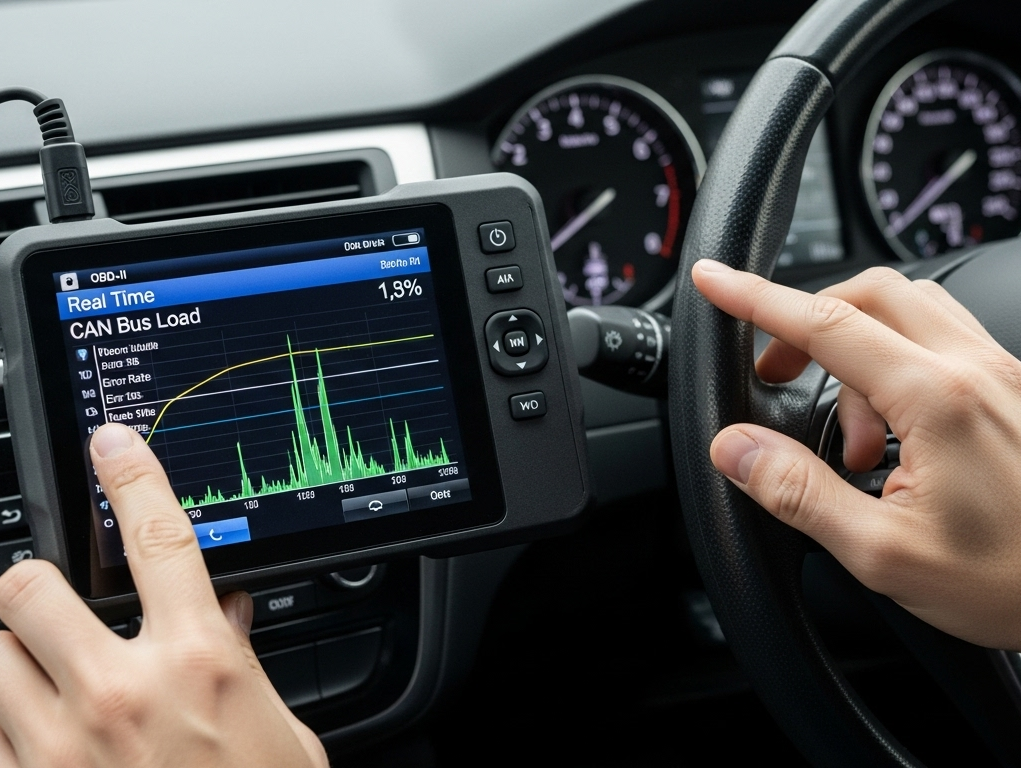
Fixing Tire Pressure Monitoring Systems wheel pressure systems in electric vehicles battery vehicles often involves more than only visual inspection. Modern OBD2 diagnostic tools offer the ability to access TPMS data and diagnose potential errors. Utilizing these machines, technicians can read fault codes, check sensor state, and even trigger sensor tests, allowing for prompt diagnosis of pressure sensor defects and minimizing out-of-service duration. These is especially necessary given the widespread complexity of EV systems.
Interpreting Tire Pressure Monitoring Systems Bands: A User's Briefing for European Region, Asia-Pacific, and the Continent
Successfully deploying tire surveillance systems throughout European Region, Eastern Asia, and the Continent requires a in-depth knowledge of the varying electromagnetic bands they implement. Unlike a homogeneous system, every area ordinarily abides by specific frequency ev service scanner ranges. In particular the Continent predominantly uses 315 MHz range and 433.92 MHz band, while the US & Canada typically uses 315 MHz range although certain latest vehicles may hold 433.92 Megahertz. Eastern Asia reveals a higher complexity environment, with various spectral regions being employed, contingent upon the area and car brand.
- Reflect on area guidelines regarding wireless signal.
- Examine your vehicle's owner's manual for particular wave.
- Leverage a sensor analyzer able to processing several wavelengths.
