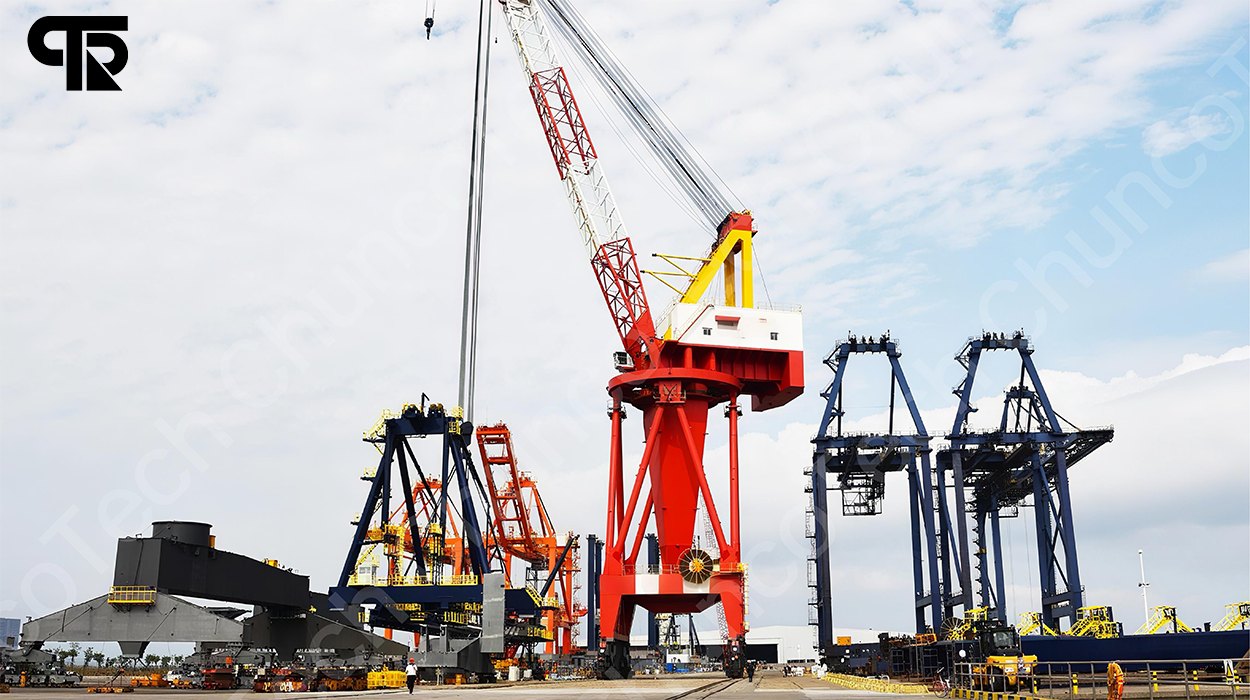
Opting for a machine, the decision often focuses on jointed crane versus unchanging boom. Linear arms yield uncomplicated nature and are ideal for perpendicular lifts, but knuckle booms grant elevated maneuverability, permitting access to constrained spaces. Consider the construction area; if you’re predominantly facing obstructions or demand more elaborate positioning, a knuckle boom is generally the wiser option. However, for unconfined areas and basic lifts, a rigid hoist might function as a heightened cost-effective alternative.
Appreciating Resilient Boom Devices: Employments and Favors
Resilient craning arm cranes represent a unique type of elevating equipment, engineered for massive load processing in laborious environments. Their main feature is a firm crane arm framework, which grants for definitive positioning and advanced firmness, especially when running in tight spaces or at notable heights. Common engagements include bridge construction, industrial projects, wind farm deployment, and facility evolution. The fundamental bonuses entail increased precaution, improved performance, and the potential to finish tasks that could be impossible with ordinary tools. This converts to diminished outlays and enhanced project fruits.
Quay Loaders: The Powerhouses of Port Container Logistics
Latest immense STS hoists represent the pinnacle of engineering triumph in the marine industry. Designed to effectively load and transfer containers between vessels and the jetty, they are necessary for the uninterrupted operation of modern ports. Their dimension – often exceeding a ton meters – and phenomenal bearing power allow them to handle the greatest container ships currently in activity, fundamentally changing global economy.
Knuckle Boom Cranes: Diversity in Elevating Operations
Articulated machines are distinguished for their exceptional multifunctionality, providing operators with a particular advantage in multiple handling jobs. Equipped with a bending boom part, these mighty devices can access around barriers and deploy freight in tight regions. This capability makes them advantageous for applications in assembly, logistics, services operations, and varied other divisions. To sum up, knuckle boom apparatus offer a significant resolution to complex elevating criteria.
Straight Boom Cranes: Correctness and Constancy Described
Fixed craning arm machines are recognized for their remarkable power to deliver spot-on lifting and placement of objects. Compared with telescopic models, their easy design produces congenital steadiness, making them fitting for jobs requiring high levels of oversight and scant sway. This feature is distinctly significant in construction sites and fields where severe tolerances are critical.
Hard Lifting Apparatus Advantages: During Toughness Matters
Conventional jib apparatus often face challenges with deformation, especially when hoisting dense loads or functioning at considerable lengths. Nonetheless, firm jib arm apparatus produce a decisive perk by minimizing unwanted sway. This enhanced firmness leads to reliable processes, higher placement, and a minimized possibility of material shifting. In conclusion, rigid lifting are ideal for applications where systematic resilience is important.
Pier Cranes: Specific In-Depth Look into STS Systems
A wharf loading machine arrangement represents such crucial component within modern shipping ports. Advanced quay handlers are intricate assemblies designed to smoothly offload freight off substantial freight liners at shore-based carrying. Their particular performance involves exactitude fabrication and advanced management to preserve stability and maximize output.
Reviewing Hoisting Forms: Folding, Direct, Heavy-Duty, and Ship-to-Shore
Settling on the suitable crane for a precise project is paramount. While many selections exist, four common categories – folding cranes, fixed cranes, rigid cranes, and pier cranes – illustrate significantly different qualifications. Articulating cranes yield superior maneuverability due to their bent arm, making them befitting for tight environs. Telescopic cranes grant flexible stretch through their extendable part, first-rate for extensive raising demands. Strong cranes maintain a plumb piece, favorable for detailed positioning where security is significant. Finally, Ship-to-Shore cranes, developed specifically for container transfer at quays, feature considerable loading power and prolonged coverage.
- Knuckle Lifter Categories
- Direct Lifting Classes
- Fixed Loader Styles
- STS Hoisting Models
Specific Maturation Regarding STS Cranes: Movements and Upgrades
Through recent years, STS (Ship-to-Shore) crane design has undergone a notable development, caused by demands for greater port performance. Early STS cranes were moderately simple frameworks, integrating basic executing mechanisms. Now, modern STS cranes feature sophisticated technology, including leading control systems, smart positioning capacities, and upgraded safety regulations. A key emergence is the combining of battery-powered propulsion, lowering carbon footprint and increasing operational durability. As well, the rise increasing use digitally controlled operation and automated maintenance are evolving the area concerned with STS crane use. The vision sees sustained intensity on electricity saving and the building of even bigger cranes to manage ever-larger container vessels.
 Giant Gantry Crane