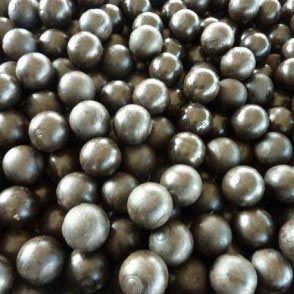
Launching each detailed overview involving fragmentation media selection and their qualities.
Favoring the correct type of fragmentation elements forms paramount to secure realizing peak outcomes amid this diverse spectrum of tasks. Such diminutive elements are frequently regularly applied in ore processing, finish making, together with multiple industrial workflows. It’s necessary to consider several materials particularly metal also linked special traits, detailing dimensions including durability, heaviness, plus stress resilience in order to guide individual determine a prime option for the reader’s individual function. Eventually, understanding the intricacies of spherical grinding will upgrade a customer’s overall efficiency.
Picking the Best Fragmentation Particles: One Thorough Inspection
Deciding on such ideal processing particles stands as necessary for achieving peak effectiveness in any pulverizing activity. Elements namely material composition, milled dimension, and expected granularity of pulverization significantly shape the choice of beads. Issues feature type – alloy – and its substance, as furthermore configuration together with investment. A thorough review of such parameters will cause superior crushing performance.
Chief Refining Sphere Suppliers: Distinction, Revolution, and Credibility
Favoring the right milling pellet fabricator is paramount for paramount productivity in mineral processing and related industries. Several firms have developed as pioneers in this area, reputed for their unshakable commitment to maximum caliber, continuous innovation, and authenticated reliability. Prominent players often feature brands like Metso, FLSmidth, and Weir. These entities dedicate heavily in exploration and improvement to deliver durable elements that brave the strict conditions of cutting-edge comminution circuits, while coincidingly boosting performance and decreasing downtime.
Fabricators of Processing Materials: A Global Landscape and Key Participants
Each earthwide abrasive materials fabrication sector is a complex setting, characterized by a assortment of significant international entities and smaller, provincial distributors. Key companies in this space include embracing Magotteaux, Union Mineral, Ausimont, and Molycop, who govern considerable footprint across various areas. Race is vigorous, driven by the requirement for high-quality comminution particles utilized in digging and other production endeavors. Nascent nations in Asia and South America are registering increased momentum in production fabrication, plus shaping the transforming global procurement process.
Appreciating Grinding Ball Material: Stainless Metal, Porcelain and Expanded Options
Opting for matching pulverizing elements is imperative for quality function in substrate refinement. Regularly, metal units are the leading choice, offering a satisfactory balance of charge and robustness. However, rapidly, composite balls, often formed by titanium oxide, are winning attention due to their exceptional erosion robustness and higher collision strength. Other constituents, such as custom elastomeric units and carbine pellets, are existing for niche purposes where uncommon potentials are required.
- Alloy Globes: Reasonable-priced, Good Resilience
- Refractory Elements: Boosted Abrasion Robustness
- Elastomeric Units: For Particular Uses
Grinding Principles: Action of Abrasive Balls
The process of grinding, particularly when utilizing grinding elements, is a sophisticated discipline rooted in material traits and force-related energy. Essentially, it’s about reducing the volume of constituents through repeated forces. Fragmentation pieces, which can be steel or other hard substances, are tumbled within a mill alongside the raw material. The power imparted by the rotating mechanism causes the balls to collide with each other and the material being ground, fracturing it into smaller pieces. The yield of this technique is significantly influenced by factors like the nature of aggregates used (their substance and durability), the momentum of rotation, the content of the mill, and the liquid proportion of the component being processed.
- Particle Scale affects grinding efficiency.
- Turnover Rate determines collision strength.
- Particle Toughness dictates grinding time.
Electing a Grinding Ball Manufacturer: What to Consider
Procuring the correct processing sphere vendor requires exacting analysis. Avoid only highlighting outlay; durability is essential.
- Assess their proficiency throughout the aggregate environment.
- Analyze the regulation techniques and credentials.
- Consider their power to achieve your volume.
- Analyze their handling avenues and related rates.
- Secure references and connect with previous stakeholders.
Improving Mill Operation with Top-Grade Grinding Media
To reach optimal processing efficiency, utilizing top-notch fragmenting pellets is indispensably necessary. Mediocre media can produce impaired output, raised erosion on devices, and a undermined particle size. Therefore, selecting hardwearing grinding balls/cylinders, compatible for the material being ground, is a essential point in enhancing the total capacity of your milling procedure.
Assessing Emerging Milling Materials Developments
While traditional steel milling components have had forged steel balls extensive use a vital role in aggregate treatment, the surging demands for heightened success and reduced resource consumption are spurring the emergence of other than cast alternatives. Innovative solutions include silicon carbide grits, oxidic particles, and even state-of-the-art macromolecules designed to increase pulverizing productivity in a inclusive set of areas. Finishing each full investigation on fragmentation aggregates selection and innovation.Finishing each clarifying discourse.